A day after Prime Minister Narendra Modi, in his Independence Day address, called for identifying and isolating dimagi Naxals those allegedly espousing a Maoist mindset Union Parliamentary Affairs Minister Kiren Rijiju on Sunday sought to clarify that the rema A day after Prime Minister Narendra Modi, in his Independence Day address, called for identifying and isolating dimagi Naxals those allegedly espousing a Maoist mindset Union Parliamentary Affairs...
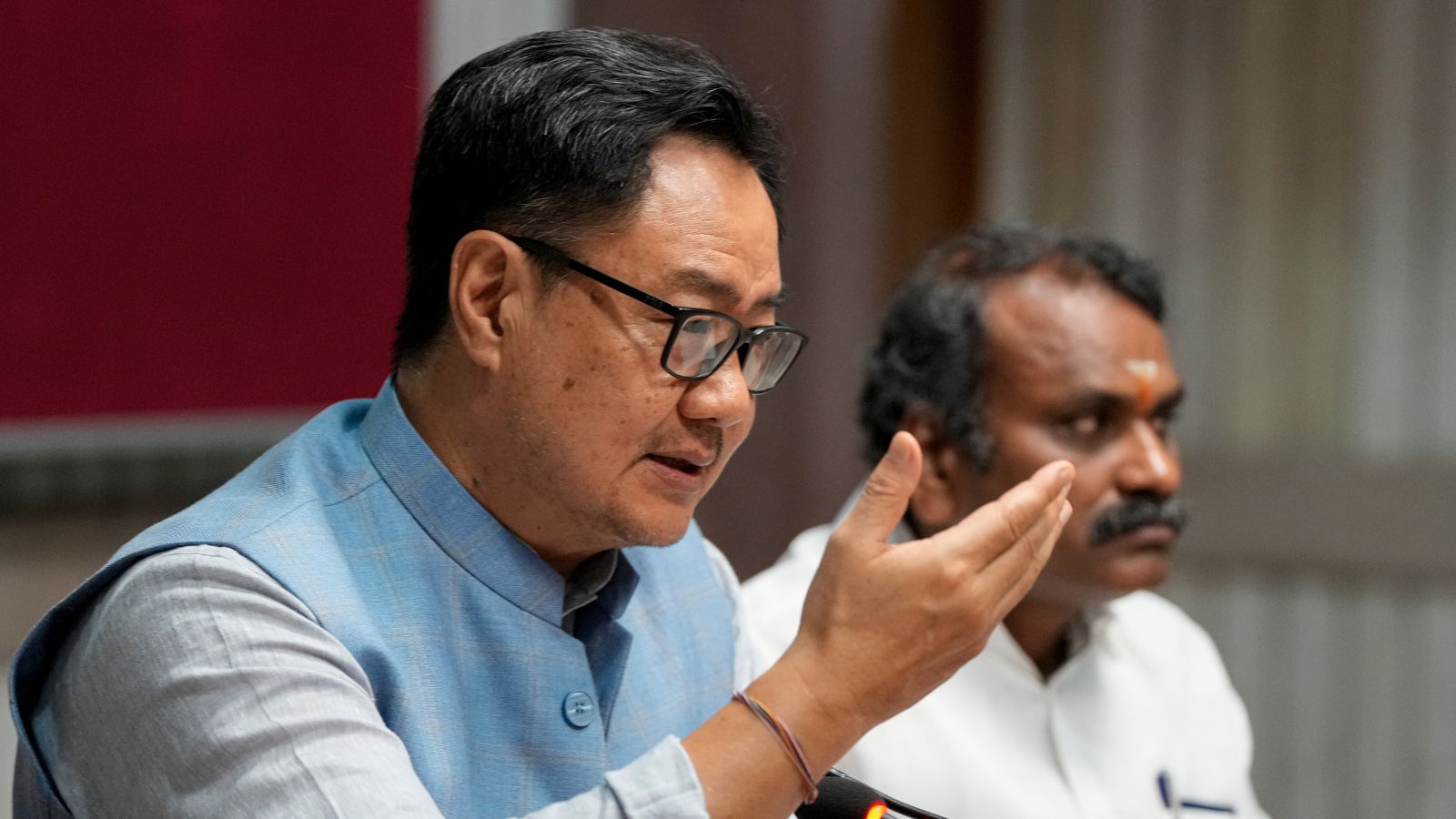
A day after Prime Minister Narendra Modi, in his Independence Day address, called for identifying and isolating “dimagi Naxals” — those allegedly espousing a Maoist mindset — Union Parliamentary Affairs Minister Kiren Rijiju on Sunday sought to clarify that the remark was not directed at Opposition leaders, .
Rijiju said Modi had referred only to those who support Maoists, separatists and people who do not believe in the Constitution. He also shared a clip of jailed student leader Sharjeel Imam’s speech in which Imam had spoken of cutting off Assam from the rest of India through the Siliguri corridor, referred to as the chicken’s neck, to draw the Union government’s attention.
“PM @narendramodi ji didn’t say opposition leaders were Dimagi Naxals. Only following are Dimagi Naxals: 1. Who support Maoists and reject Indian Constitution. 2. Who stand with separatists & support Article 370. 4. Who want to cut chicken neck to separate North-East from India (sic),” Rijiju said in a post on X.
Rijiju’s clarification came a day after Modi said that while armed Naxalism was nearing its end in the jungles, its ideological sympathisers were looking for opportunities to create unrest in the country. “We have succeeded in eliminating armed Naxals from the forests and liberating the country from that menace. However, while the armed Naxals are gone, the dimagi Naxals remain, and these dimagi Naxals are on the lookout for an opportunity,” Modi had said.
“They are looking for ways of violence and anarchy. They are resorting to various tactics to drag society onto the wrong path. We must identify these mental Naxals, isolate them,” he added.
Even as Modi put India’s youth, energy security and the speed of governance at the centre of his pitch, combining immediate economic concerns with the larger goal of making India a developed and strategically autonomous power.
The speech marked another stage in an evolution visible across his 12 previous addresses: from the early emphasis on a more responsive government and everyday delivery, Modi’s speeches gradually expanded into a larger project of economic transformation, national security and self-reliance, before acquiring an increasingly explicit civilisational and political vocabulary.
The 2047 goal of Viksit Bharat now provides the umbrella under which these strands — welfare, technology, jobs, energy, security and governance — are brought together.
However, his “dimagi Naxal” remarks triggered a political row, with Opposition leaders alleging that Modi’s reference was aimed at activists, academics, intellectuals and political critics. They also pointed to terms such as “Andolanjeevi”, “urban Naxals” and “tukde tukde gang”, which have featured in political discourse in the past.
Congress leader P Chidambaram on Sunday said he was “proud” to be a “dimagi Naxal”. In a post on X, he said: “I am proud to be a dimagi naxal.”
Congress MP Renuka Chowdhury also hit out at the Prime Minister’s remark, questioning the use of the term against those who disagree with the government and describing the language as an attempt to stigmatise dissent. “Obsessions of an inferior mind! What is Dimaagi Naxal? What is Urban Naxal? What is Khan Market Gang? What does it even mean? Why do you hate intelligentsia? These are adjectives used by a PRIME MINISTER for his fellow citizens, from the ramparts of Red Fort, that too on Independence Day! Stop disparaging your own fellow citizens! Is this not Dimaagi Bankruptcy!,” she said in a post on X.
CPIML (L)’s Dipankar Bhattacharya also hit out at Modi over the remarks. “Do they think if they somehow drop the word Naxal, people would be scared or disillusioned? You are making a mistake Modiji. If you call us Naxals for speaking the truth, we are Naxals a thousand times over. Those who have revolutionary spirit, will they run away because he (Modi) called them ‘dimagi Naxal’?” he said.
Meanwhile, BJP Rajya Sabha MP and former Uttar Pradesh DGP Brij Lal backed Modi, saying “dimagi Naxals”. “These Dimagi Naxals don’t live in forests or bear arms, fire bullets; they only use their brains. They live in cities in the garb of professors, lecturers, NGO operators, intellectuals, poets… write articles, conduct conferences, seminars and… especially in the minds of the youth, fill their violent ideology,” he said.
Jatin Anand is an Assistant Editor with the national political bureau of The Indian Express. With over 16 years of experience in mainstream journalism, he is a seasoned expert in national governance, electoral politics, and bureaucratic affairs. Having covered high-stakes beats including the Election Commission of India (ECI), intelligence, and urban development, Jatin provides authoritative analysis of the forces shaping Indian democracy. He is an alumnus of Zakir Husain Delhi College (DU) and the prestigious Asian College of Journalism (ACJ), Chennai, where he specialized in Print Journalism. Expertise High-Stakes Beat Coverage: Throughout his decade-and-a-half career, Jatin has covered some of the most sensitive and influential beats in the country, including: The Election Commission of India (ECI): Monitoring electoral policy, reforms, and the conduct of national and state polls. National Security & Intelligence: Reporting on the internal mechanisms and developments within India's security apparatus. Urban Development: Analyzing the policies and bureaucratic processes driving the transformation of India’s cities. National Political Bureau: In his current role, he tracks the intersection of policy and politics, offering deep-dive reporting on the Union government and national political movements. Academic Credentials: Zakir Husain Delhi College (DU): Alumnus of one of Delhi's premier institutions. Asian College of Journalism (ACJ), Chennai: Specialized in Print Journalism at India's most prestigious journalism school. ... Read More