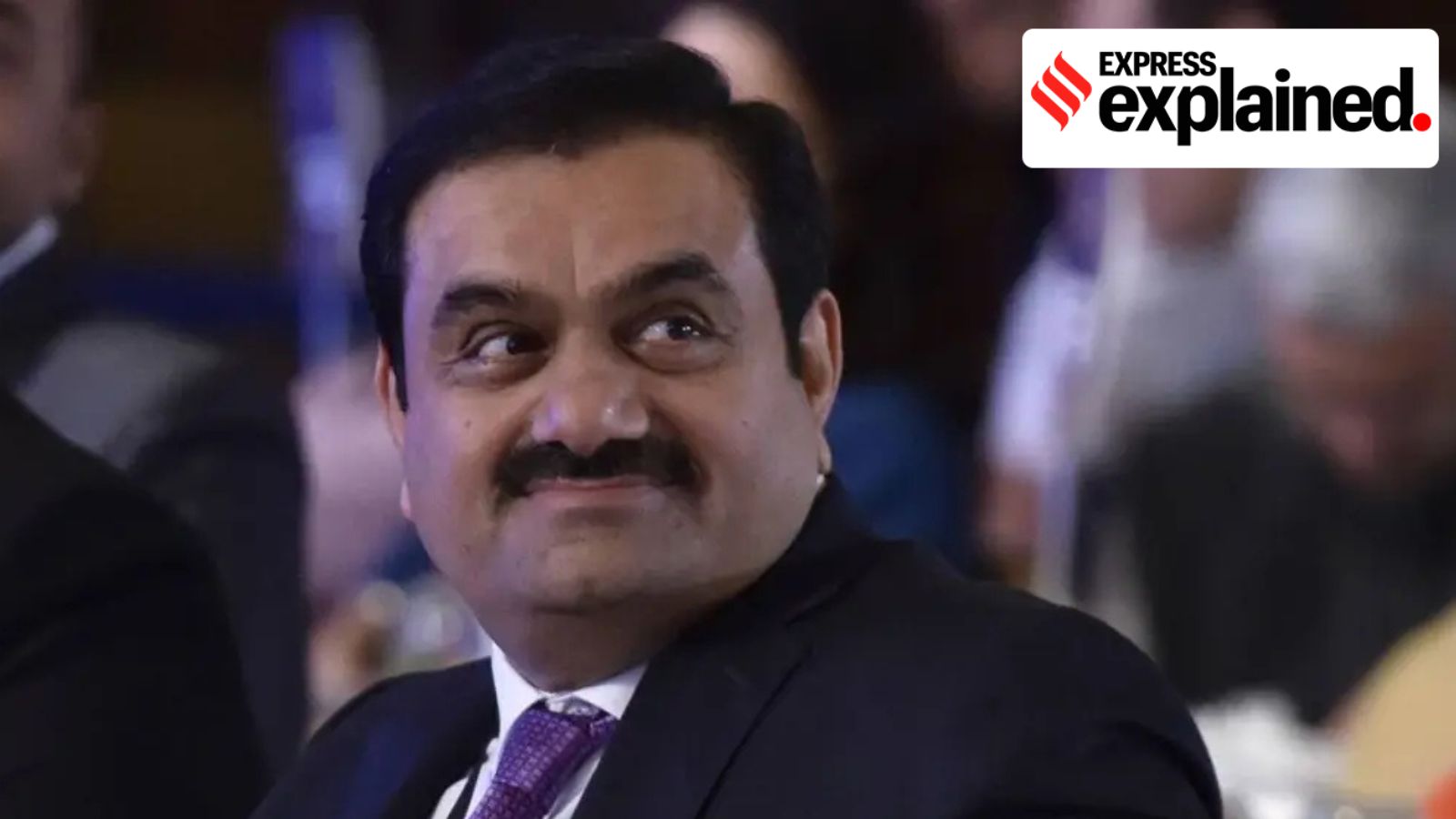
A US federal judge on Monday dismissed criminal charges brought by US prosecutors against Indian billionaire Gautam Adani, ending a case that began with his indictment in November 2024.
However, Brooklyn-based judge Nicholas Garaufis said there were “concerning” irregularities in the process in how the Department of Justice (DoJ) decided to abandon the fraud and bribery case. The judge also examined whether Adani’s November 2024 promise to invest $10 billion in the US influenced the decision. He ultimately accepted the DoJ’s assertion that it was not.
The DoJ had moved to dismiss the criminal charges this May. It argued that continuing the prosecution was not in the US public interest, citing the predominantly foreign nature of the alleged conduct, difficulties in securing evidence and witnesses abroad, and its current enforcement priorities. Garaufis said the government had broad discretion over whether to continue a prosecution, despite his concerns over how the decision had been reached.
Adani was indicted along with his nephew Sagar Adani and six others. What was the case against them, and how did an alleged bribery scheme in India lead to a US prosecution?
In November 2024, US prosecutors accused Gautam Adani, Sagar Adani, and others of participating in a scheme involving alleged bribes of roughly $265 million to Indian officials to secure solar-power contracts expected to generate billions in profits.
The charges against Gautam Adani centred on allegations that the bribery scheme was concealed from US investors and international financial institutions while billions of dollars were raised from them.
The Adani Group consistently denied wrongdoing.
Adani Green Energy is the renewable energy arm of the Adani Group, while Azure Power is a renewable power producer.
According to US prosecutors, the “Indian Energy Company” — understood to be Adani Green Energy — and a “US Issuer” — Azure Power, whose securities were traded on the New York Stock Exchange — won awards to supply eight gigawatts and four gigawatts of solar power, respectively, under a manufacturing-linked solar tender floated by the state-owned Solar Energy Corporation of India (SECI).
Under the arrangement, SECI had to find state electricity distribution companies (discoms) to buy the power before it could enter into corresponding power purchase agreements with Adani Green and Azure Power.
SECI initially struggled to find buyers because of the high prices. US prosecutors alleged that the bribery scheme then took shape. They claimed that between 2020 and 2024, more than $250 million in bribes were offered or promised to Indian government officials to persuade state discoms to enter into agreements to purchase the solar power.
Andhra Pradesh emerged as the biggest buyer of the solar power that SECI had struggled to sell.
The Indian Express reported in November 2024 that Andhra Pradesh’s discoms entered into an agreement with SECI in December 2021 to purchase 7,000 MW of solar power. According to US court filings, around Rs 1,750 crore — more than 85% of the alleged bribes — was offered to an unnamed “high-ranking” Andhra Pradesh government official to facilitate the purchase.
The indictment alleged that Gautam Adani personally met an Andhra Pradesh government official several times in 2021 to advance the alleged bribery scheme. The Indian Express also reported in November 2024, citing US filings, that Gautam Adani met then Andhra Pradesh Chief Minister Y S Jagan Mohan Reddy in August 2021. The SEC alleged that “at or in connection with” that meeting, Adani paid or promised a bribe to Andhra Pradesh government officials to facilitate agreements for the purchase of 7,000 MW of solar power.
According to US prosecutors, the contracts obtained through the alleged scheme were projected to generate more than $2 billion in post-tax profits over about 20 years.
The alleged bribes concerned Indian officials and solar-power contracts in India. The Indian Express reported in November 2024 that the US connection arose from Adani Green’s fundraising from US investors and international financial institutions, and from Azure Power’s presence in US markets. US prosecutors alleged that Gautam Adani, Sagar Adani and Vneet Jaain concealed the bribery scheme while seeking this financing.
Prosecutors alleged that Gautam Adani, Sagar Adani and Vneet Jaain concealed the alleged bribery scheme while raising this money. According to the DoJ, Adani Green and its subsidiaries raised more than $2 billion through US dollar-denominated syndicated loans involving international financial institutions and US-based investors, and more than $1 billion through bond offerings marketed and sold to investors in the US and elsewhere.
Five other defendants were charged with conspiracy to violate the US Foreign Corrupt Practices Act (FCPA), while four were also charged with conspiring to obstruct US investigations into the alleged scheme.