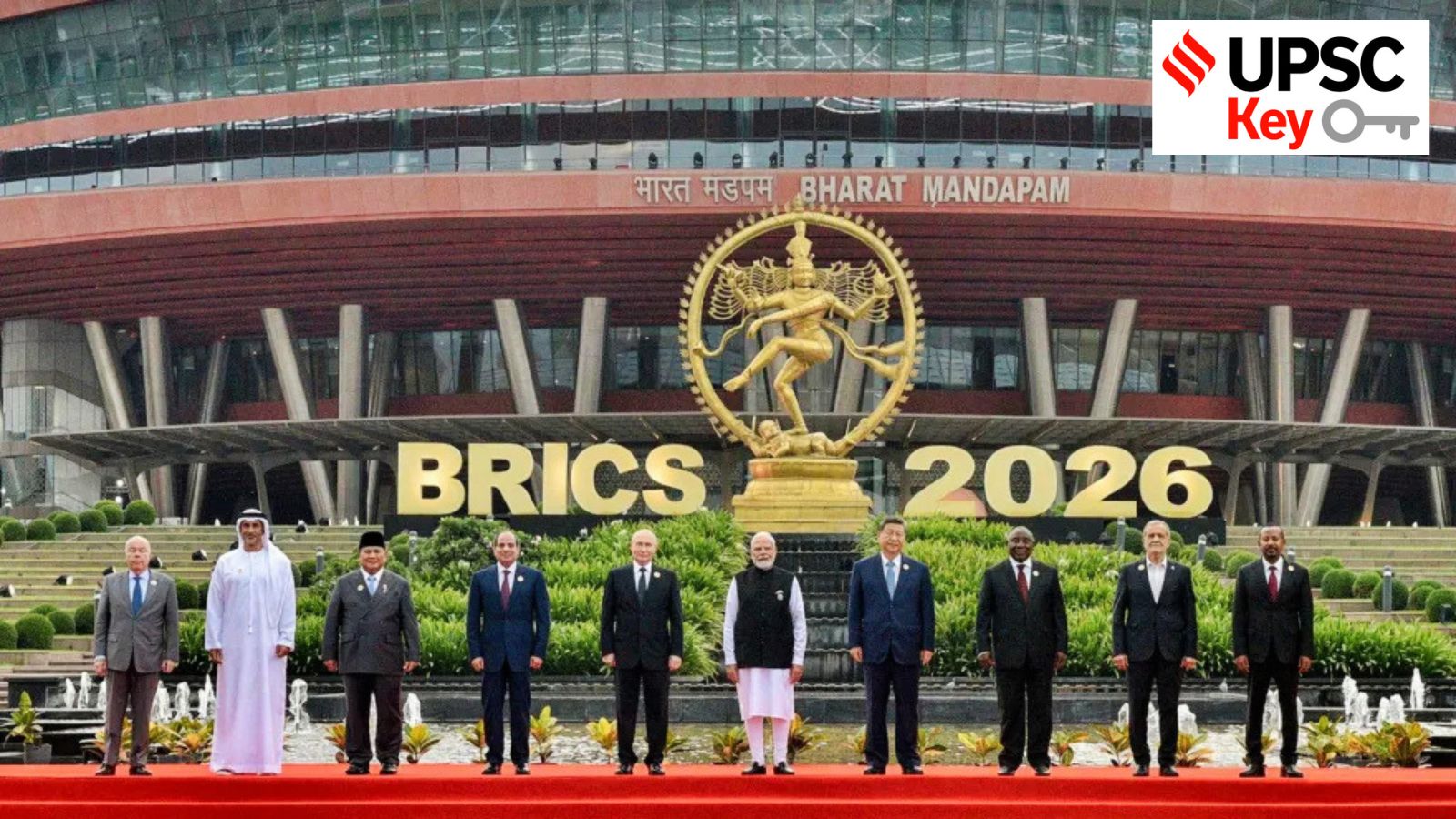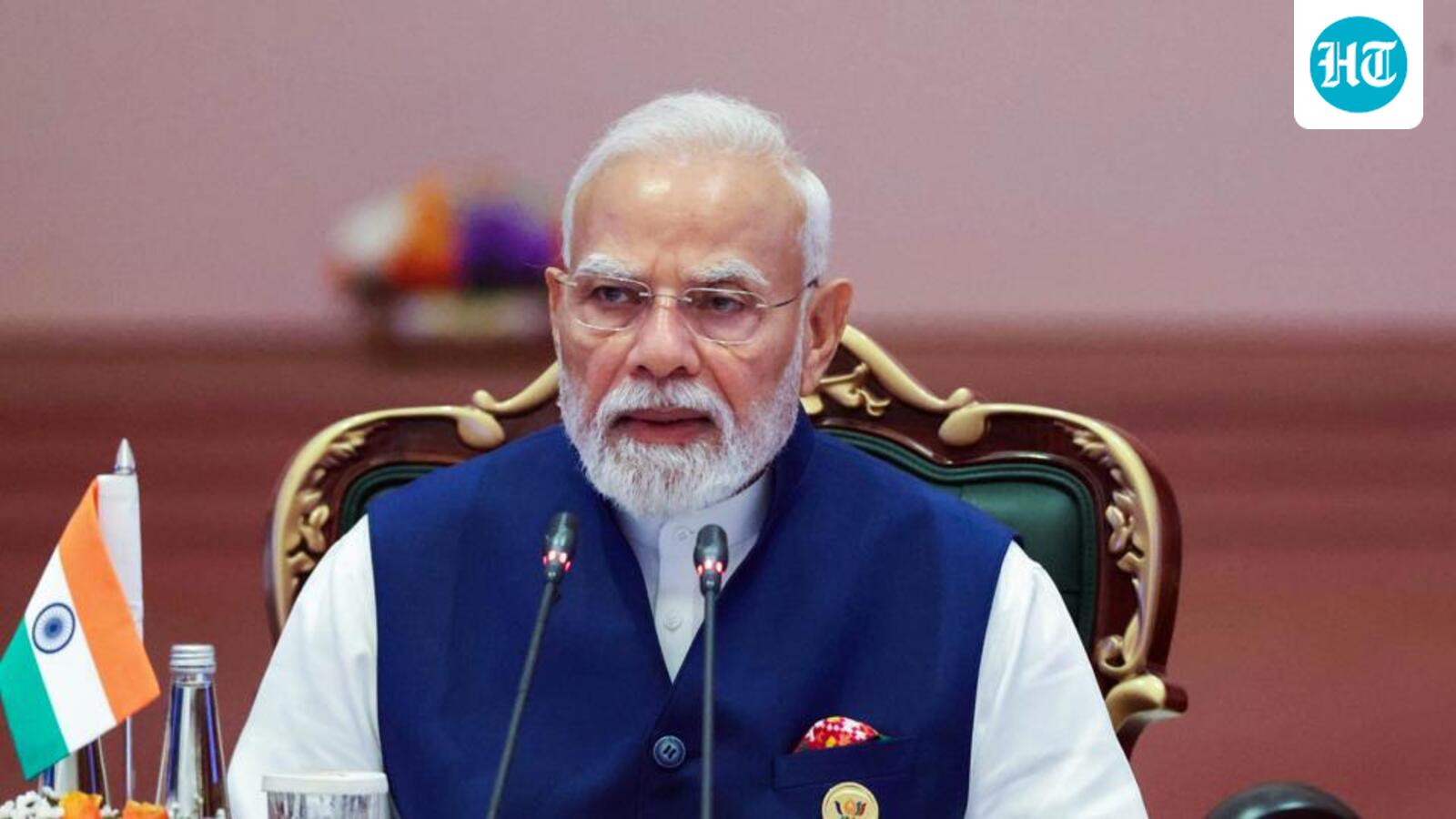
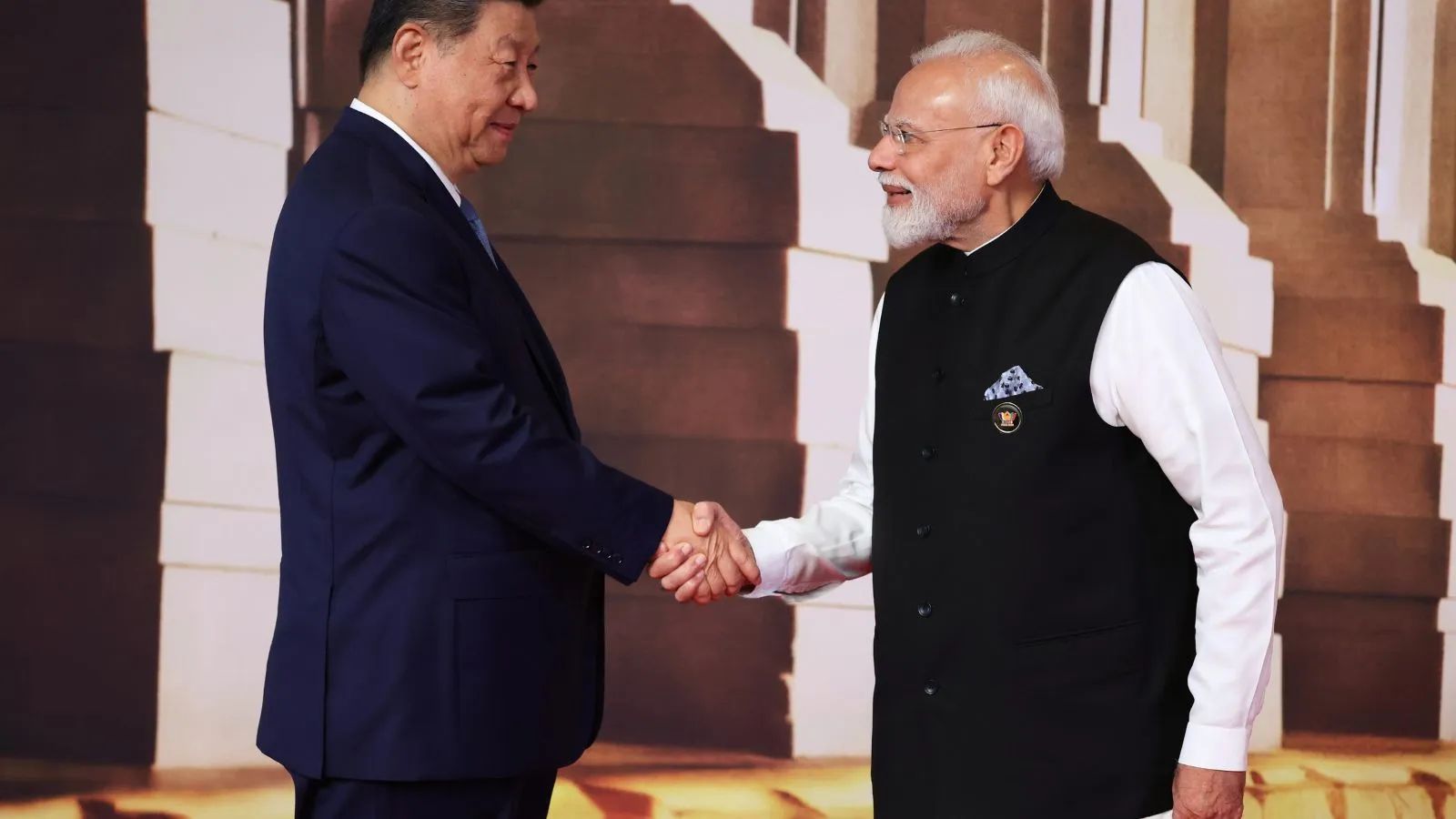
What makes the New Delhi BRICS Summit sidelines meeting between Narendra Modi and Xi Jinping noteworthy is not any pronouncement of a dramatic reconciliation between the two Asian giants. The encounter is subtler in its import. It suggests that India and China are developing a political lexicon that accommodates both rivalry and cooperation simultaneously, framing their bilateral differences within a broader realignment of global affairs. One should take what comes out of such a meeting seriously, but not read it too literally. In agreeing “differences should not become disputes” and vowing a “fair, reasonable, and mutually acceptable” way forward on the boundary issue, both leaders were at one. For his part, Modi restated the case for mutual respect, sensitivity, and interest; Xi said India and China would be “partners rather than rivals”. As profound as the differences between them are, they do not eliminate them. States do not usually make headway in international politics by permanently resolving their differences; they get used to positioning themselves around them.
The upshot of the Modi-Xi meeting is that positional rivalries are dynamic. India and China are still in competition. They cannot wish away the asymmetries of economic power, the unresolved boundary dispute and what transpired in 2020, or China’s ties with Pakistan and India’s with the United States, its allies, and other regional projects. Modi was clear that an “essential basis” for any bilateral relations is peace and tranquillity on the border.
However, rivalry is a relationship Born of the positions states hold vis-à-vis each other, not an identity. Those positions are subject to change. The India-China relationship is a case in point: At times they have been postcolonial partners, at others developing-country collaborators or strategic adversaries, sometimes simply Asian competitors. No single description has ever been wholly apt. Hence the significance of the latest exchange. Institutional contact has resumed, and bilateral trade has reached a new peak; structural imbalances in trade, market access, supply chains, and mobility are now on the table. In short, there is an effort to put some workable order to the relationship even as the competition continues. Strategic accommodation can exist without the rivalry vanishing.
Then there is the broader consideration. Relations between Major powers are never purely bilateral; they are part of how power is distributed in the system. Looking only at New Delhi and Beijing misses the mark when it comes to India and China. China’s rise has brought India into closer contact with the US, Japan, Australia and Europe by changing its strategic environment. However, things are in flux once more. American power remains as formidable as ever, though more transactional in its application, while Russia’s stand-off with the West, wars in Eurasia and West Asia, tariff politics, and the heft of the Global South are creating a more complex distribution of power. Add in technological fragmentation and supply-chain worries, and neither country can reduce the other to a simple bilateral security problem.
In the Chinese telling of the meeting, Modi is quoted as saying that in pursuing an independent foreign policy, India is “not affected by any third party” in its dealings with China. This is not to be taken as a move to put distance between India and Washington. It is a statement of strategic autonomy in its most basic form: That India’s ties with the great powers need not be exclusive.
For its own reasons, Beijing has to ensure that its relationship with India does not turn into a permanently adversarial one amid its strategic contest with the United States. The new international system is thus giving both countries a reason to compartmentalise their competition. In the process, the global distribution of power is being shaped by, and is shaping, their bilateralism.
The divide between India and China is one of territory, political systems, strategic outlook, and the disparate pace and direction of their development. They have divergent views of Asia. Where China has economic and technological heft that India cannot yet match, India is intransigent about an Asian order with China at its head. Moreover, an older notion is still gaining political currency beneath it all: Asia in a sense beyond geography. Not in the way of some Bandung romanticism or Talk of “Asian solidarity”, the twenty-first century is hardly conducive to such things. Rather, one sees the beginnings of a recognition, if of a kind that is less substantial, no less important, that the powers of Asia are of a piece in terms of the economic and technological change they are undergoing and their political agency.
The geopolitical dimension is revealing: Power is shifting toward Asia, even if the United States remains essential to any balance there. It is material too. Artificial Intelligence, semiconductors, digital infrastructure, the shift in energy, manufacturing, and payment networks, and consumer markets of immense size are redefining the very nature of power. In short, Asia is where the future, in economic and technological terms, is being made and, at the same time, the main arena for geopolitical contestation. One finds evidence of such a consciousness in the exchange between Modi and Xi. In putting forward his four propositions, Xi made the link explicit between bilateral stabilisation and the need for multilateral coordination and development. The two leaders agreed on expanding common ground in regional and global matters and working together in multilateral fora, with Xi noting the onus on the Global South’s two most populous members.
One need not read this warmth as a prelude to an India-China condominium or an alliance of Asians against the West; India would be ill-advised to countenance either. Any Asian identity that has room for India has to be pluralist, not hierarchical, is what lends the present day its interest. India and China can appreciate how their own futures are bound up in The Rise of Asia without having to concur on its political make-up. Hence, the New Delhi meeting is of note for neither the rosy view of a “reset” nor the foregone conclusion of rivalry. A more basic truth is at play: Structures alter, and so do positions. India and China will compete, at times with vigor. Nonetheless, as technological and economic transformations accelerate and global power becomes more distributed, the two giants may realise that resolving their differences is a global necessity rather than a matter of balancing concessions and calculating interests.
The writer is professor of International Relations at Jadavpur University